
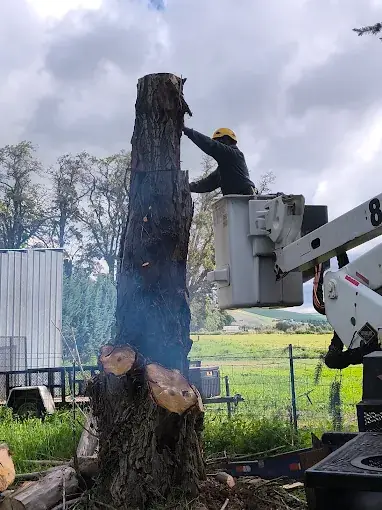
Stump Grinding in Pasco — From Broadmoor Yards to Cleared Windbreak Rows
Take out a row of poplars or a single backyard tree in Pasco and you're left with the same problem: a stump in the way. We grind them below grade whether it's one stump behind a Three Rivers patio or forty left over from a cleared Road 68 windbreak row, and we bring the right size grinder to either job.
Clearing out after a windbreak removal
A finished poplar removal along Road 68 or Road 100 usually leaves a line of stumps across the property, evenly spaced from when the windbreak was originally planted decades ago. Grinding the whole row in one visit is far more efficient than tackling it stump by stump on separate trips, and it clears the ground for replanting, fencing, or just a flatter, mowable field.
Alkaline Pasco soils can make root systems on older poplars run wide and shallow rather than deep, so we account for that when we're clearing a full row rather than grinding blind — surface roots often extend further out than the stump itself suggests.
Backyard stumps in Broadmoor and Three Rivers
New landscaping, sod, or a patio slab in a newer Pasco subdivision needs the stump gone below grade, not just cut flush with a chainsaw. We take it six inches under finished grade so there's nothing left to catch a mower blade or heave up through new sod as the roots decompose over the following seasons.
Russian olive and black locust root systems
These species sucker aggressively from leftover roots if you don't grind them out properly, sending up new shoots from root fragments that can be surprisingly far from the original trunk. Grinding the stump and surface roots on the same visit stops the regrowth problem before it starts, which matters a lot on fence lines and canal banks where new olive shoots come back fast and re-establish within a single growing season.
Chip and haul-off options
On residential lots we'll leave chips to backfill the hole or haul every bit off-site, whichever you'd rather have. On rural and ag jobs, haul-off is priced per load, which keeps larger windbreak clean-ups reasonable instead of getting billed stump by stump when you're clearing a whole property at once.
Grinding around irrigation lines and utilities
A lot of Road 68 and Road 100 properties run drip line or pivot irrigation close to the old windbreak rows, and East Pasco lots often have gas or water service laid shallower than you'd expect. We call in an 811 locate before grinding any stump we haven't worked around before, and we hand-check the perimeter of the grind zone on properties with known irrigation runs so a fast-moving wheel doesn't catch a line buried a few inches under the surface.
Franklin PUD service drops and buried lines near East Pasco and Court Street properties get the same treatment. It's a five-minute call that saves a much longer afternoon.
Getting the ground ready for what's next
Most people grinding a Pasco stump have a next step in mind — new sod in Three Rivers, a fence line in Broadmoor, a replanted windbreak on Road 100, or just a mowable field where a poplar row used to stand. We grind to match that plan rather than a one-size depth: six inches under grade is plenty for sod or seed, but a new fence post or a replanted tree may need the hole cleared wider and deeper so roots or hardware aren't fighting old stump material for years afterward.
If you're not sure what's next yet, we'll grind to the standard depth and leave the site in a state you can build on whenever you're ready, without a second visit required.
Timing matters more in Pasco than most people expect. The alkaline soils out here drain fast and the wind pulls moisture off bare ground quickly, so a freshly ground pad left open through July will crust over and shed water instead of taking seed. If you plan to plant, tell us when, and we'll leave the grindings and grade in the condition that suits that date — packed and mulched to hold moisture, or cleaned out to bare soil so you can amend and water it in right away.
Common Stump Grinding Jobs In Pasco.
Looking For A Tree Company That Actually Shows Up?
You're in the right place. No no-shows. No sketchy bids. No mess left behind — just a hard-working Tri-Cities crew that treats your property like our own.
See why Tri-Cities homeowners choose Berserker.
Can you grind a whole row of old poplar stumps at once?
Yes — that's a routine follow-up to a windbreak removal. We bring the grinder out for the full row in one visit rather than pricing each stump separately.
Will grinding stop Russian olive from coming back?
Grinding the stump and surface roots together greatly reduces resprouting, though a very established colony may need a follow-up visit.
Do you grind stumps in alkaline Pasco soil differently?
The soil itself doesn't change the process, but older poplar root systems here tend to run wide and shallow, so we check root spread before grinding a whole row.
How deep do you grind for new sod in Broadmoor or Three Rivers?
Six inches below finished grade is standard, deep enough that a mower or new sod roots won't hit it.
Other Work We Do In Pasco.
Stump Grinding Close By.
Got A Tree?
Consider It Handled.
Free estimates. Same-week scheduling on most jobs. Emergency calls answered any hour.
- Free On-Site Estimates
- Licensed, Bonded & Insured
- 24/7 Storm Response
- Cleaner Than We Found It